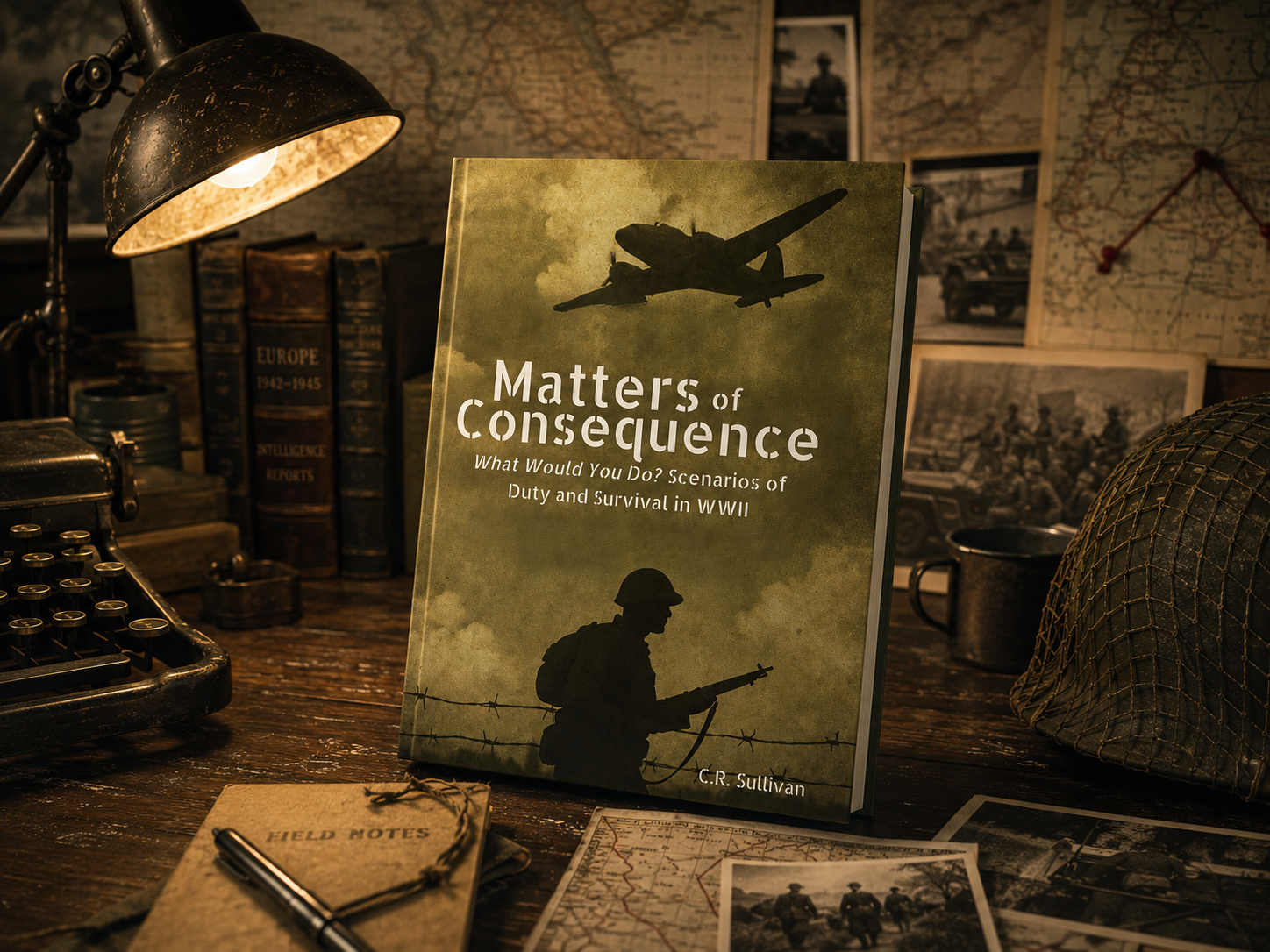
The WWII Challenge: Safehouse or Trap?
WWII Recovery Decision Scenario
France, 1944.
An American airman has survived the crash of his bomber and is now moving through occupied territory with the help of local contacts. He is tired, hungry, and injured badly enough that he cannot keep moving for long.
Your recovery network has directed him toward a possible safe house outside a small village near the edge of a forest.
The instructions were simple:

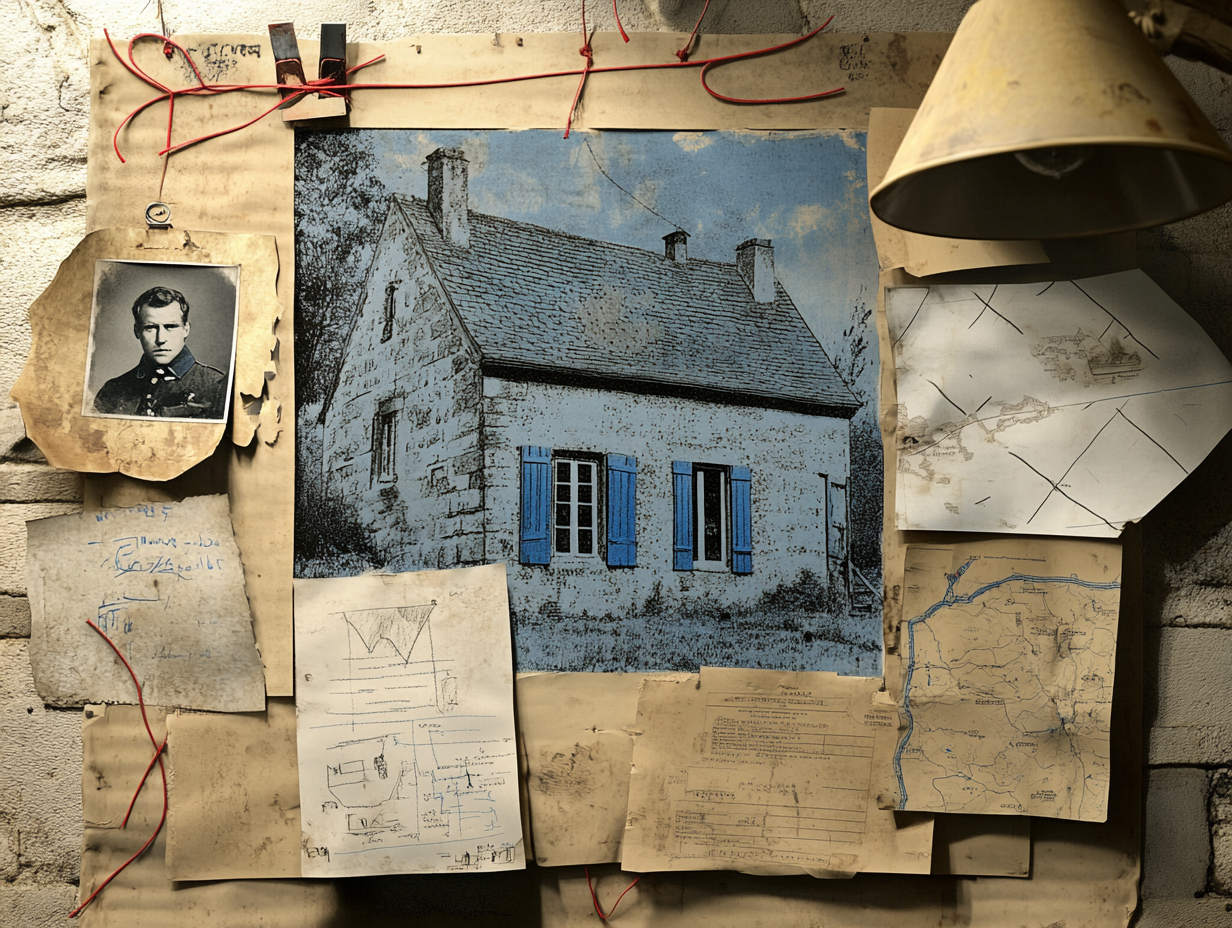
Look for the cottage with blue shutters.
Wait for the white signal cloth in the upstairs window.
Use the password: “The harvest was early.”
The reply should be: “But the winter will be long.”
By dusk, the airman reaches the lane. There is a cottage with blue shutters. But the signal cloth is missing. A woman answers the door before he knocks. She looks frightened, but not surprised. When he gives the password, she pauses and replies: “The winter always comes.” It is close. Almost right. From the road behind him, he hears the distant sound of an engine. Now he has only moments to decide whether this house is shelter, surveillance, or a trap already closing around him.
The Evidence
Clue One: The Blue Shutters
The cottage matches the description exactly. The shutters are blue, faded by weather, and visible from the lane.
Possible meaning: The house may be the correct safe location.
Red herring: Blue shutters are common in the region, and German patrols may know the description too.
Clue Two: The Missing Signal Cloth
The upstairs window is bare. No white cloth hangs in view.
Possible meaning: The house is compromised, and the missing cloth is a warning.
Red herring: Rain earlier in the day may have forced the family to remove the cloth, or they may have feared it was too visible.
Clue Three: The Password Almost Fits
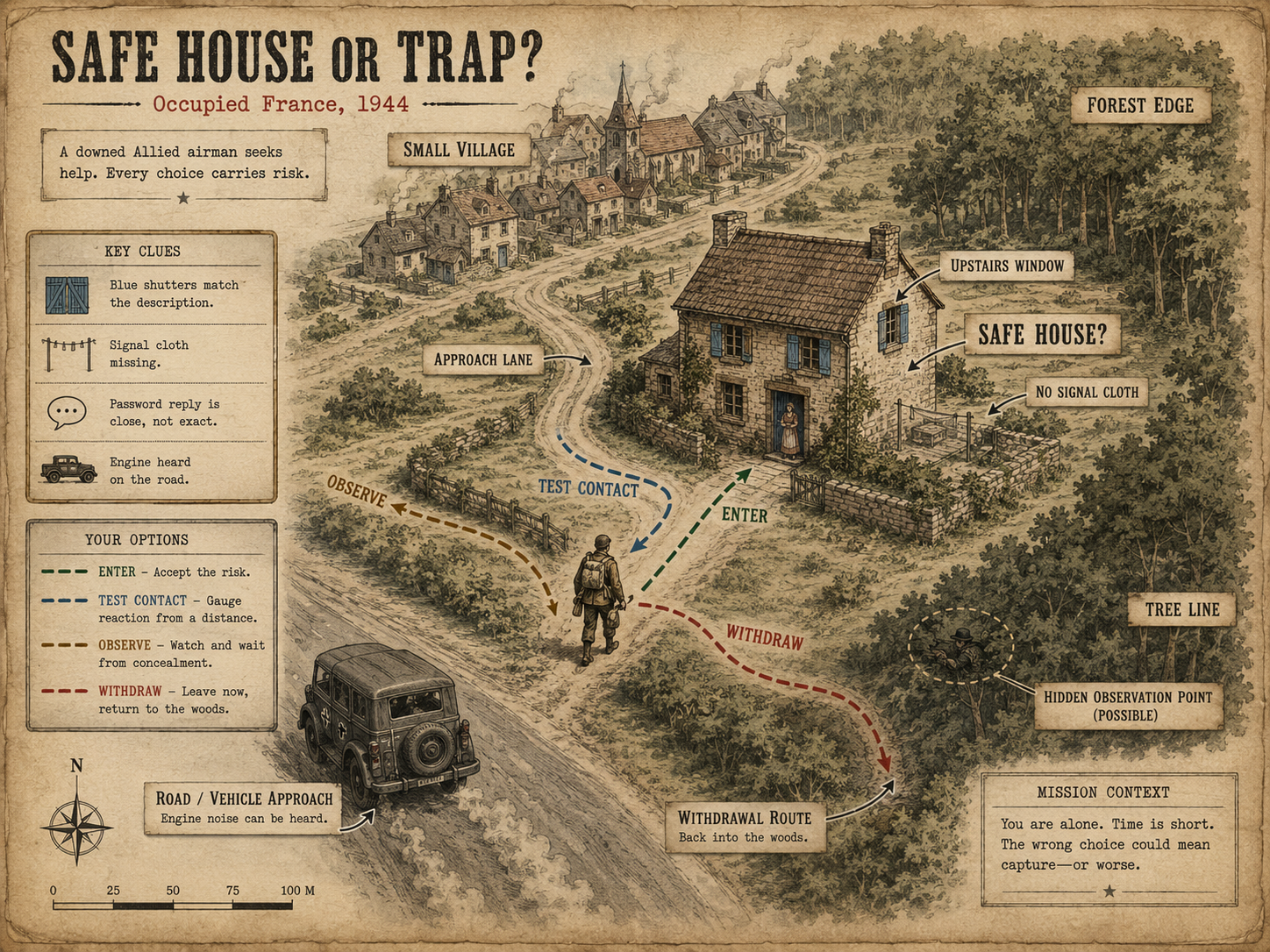
The woman does not give the exact reply, but her answer is close enough to suggest she understands the phrase.
Possible meaning: She may be a genuine contact under stress who misremembered the wording.
Red herring: A collaborator or informant may know part of the exchange but not the exact response.
Clue Four: She Answers Too Quickly
The door opens before the airman knocks.
Possible meaning: She was watching for him because the network expected his arrival.
Red herring: She may have been warned by someone else, including the Germans.
Clue Five: The Engine on the Road
A vehicle is approaching from behind.
Possible meaning: A patrol may be near, leaving no time to hesitate.
Red herring: It may be a farm cart, local police, or an unrelated vehicle passing through the village.
Your Decision
A) Enter the House
Trust the contact, accept shelter, and hope the altered password is the result of fear rather than betrayal.
Risk: If the house is compromised, the airman may be captured immediately. The family may already be under surveillance, and his arrival could confirm the entire escape route.
Possible Result:
The woman pulls him inside, bolts the door, and hides him beneath loose floorboards as a German patrol rolls past. The missing signal cloth was removed because soldiers had searched the lane that morning. Her reply was wrong because the original contact had been arrested, and she was using only what she remembered.
Alternate Result:
The room is too quiet. A man stands behind the kitchen door. The airman realizes too late that the house has been turned. The blue shutters were left in place as bait.
B) Withdraw Immediately
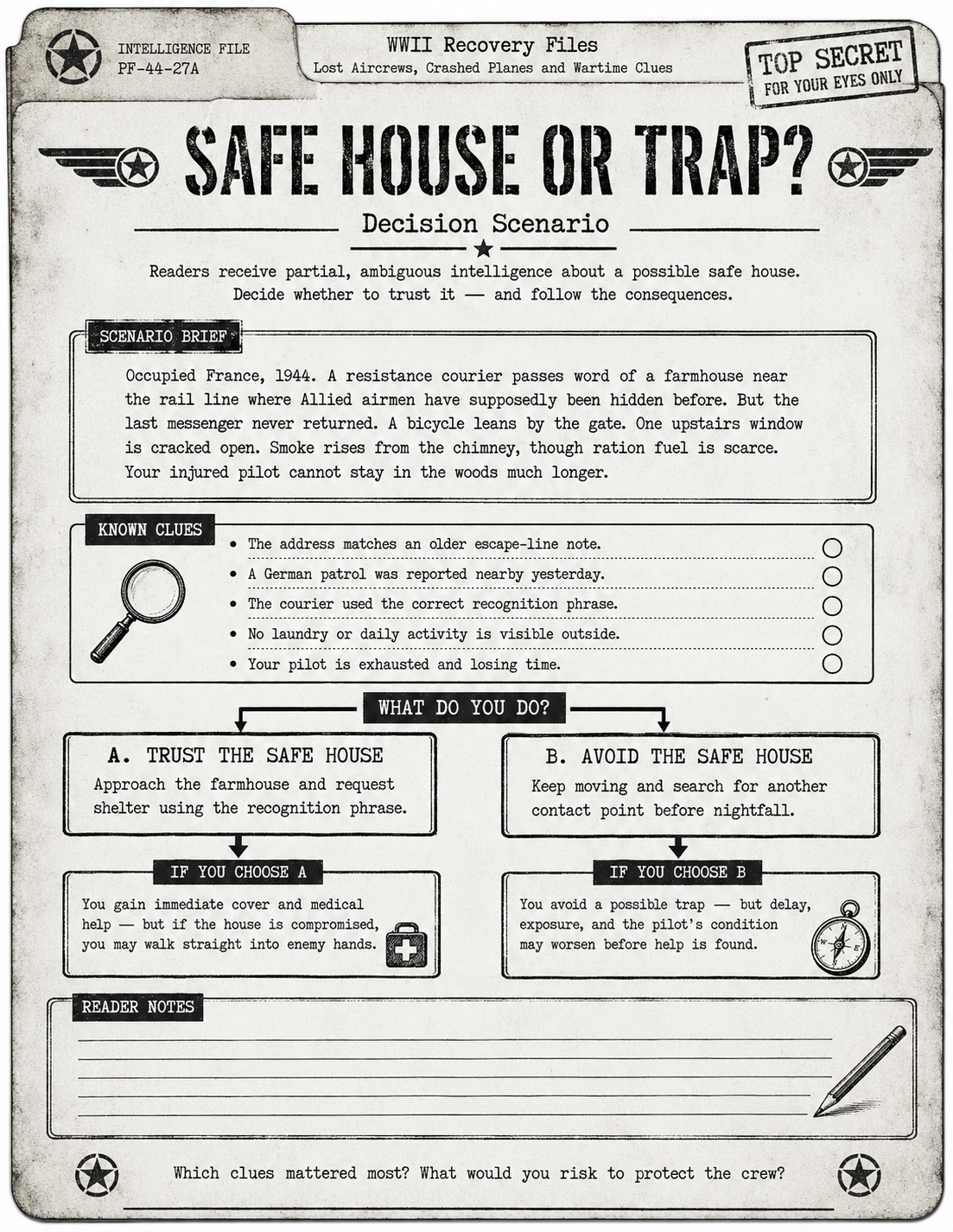
Sample Safehouse Checklist from Hidden Signal Media
Leave the lane, abandon the safe house, and move toward the tree line before the vehicle arrives.
Risk: The airman is injured and may not survive another night outside. If the house was genuine, he has refused his best chance at rescue.
Possible Result:
He reaches the trees just as a patrol stops at the cottage. The woman was being watched, and his hesitation saves him from arrest. Later, another contact confirms the safe house had been compromised two days earlier.
Alternate Result:
The approaching engine belongs to a farmer. The house was safe. By refusing entry, the airman spends the night exposed, worsening his injury and delaying contact with the escape line.
C) Test the Contact
Do not enter. Ask a second question from the network’s briefing, such as the name of the next village or the color of the courier’s scarf.
Risk: The delay may draw attention. If she is genuine, suspicion may insult or frighten her. If she is false, she may stall long enough for the patrol to arrive.
Possible Result:
The woman answers correctly and adds one detail not in the briefing: the courier limped from an old quarry accident. She is genuine. The password changed because the original route was disrupted.
Alternate Result:
She hesitates too long. Her eyes move toward the upstairs window. The airman steps back just as a curtain shifts and a man’s silhouette appears behind the glass.
D) Create a Distraction and Observe
Move away from the door, hide near the lane, and watch what happens when the vehicle passes.
Risk: Waiting costs time and strength. If the Germans search the area, he may be found outside without shelter.
Possible Result:
The vehicle slows but does not stop. After it passes, the woman places a cloth in the upstairs window, but it is dark, not white. The original signal has changed. The house may still be usable, but only with caution.
Alternate Result:
The vehicle stops. Two men enter the cottage without knocking. The woman does not resist. Whether by force or cooperation, the house is no longer safe.
Best Outcome
The safest choice is usually C) Test the Contact.
In recovery operations, one correct clue is not enough. A safe house should be judged by a pattern of evidence: location, signals, passwords, behavior, timing, and whether the contact knows details that an enemy informant would not.
The blue shutters are useful, but too visible.
The missing cloth matters, but may have an innocent explanation.
The password is close, but not close enough to trust without testing.
A second verification gives the airman a chance to separate a frightened ally from a prepared trap.

Worst Outcome
The most dangerous choice is A) Enter the House without further verification.
Exhaustion, fear, and desperation can make any door look like safety. But in occupied territory, a compromised safe house could be used to capture not just one airman, but every courier, guide, and civilian connected to the route.
One careless knock could collapse an entire line.
Debrief
In wartime recovery work, the greatest danger was often uncertainty. Safe houses depended on trust, secrecy, and tiny signals that could be misunderstood, forgotten, changed, or deliberately copied by the enemy.
A blue shutter might be a promise. A missing cloth might be a warning. A password that almost fits might be the sound of courage under pressure — or the beginning of an arrest. When the evidence is incomplete, survival depends on reading not only the clues, but the spaces between them.
Final Dispatch
A safe house is only safe until the wrong person knows where it is.
The Hidden Signal
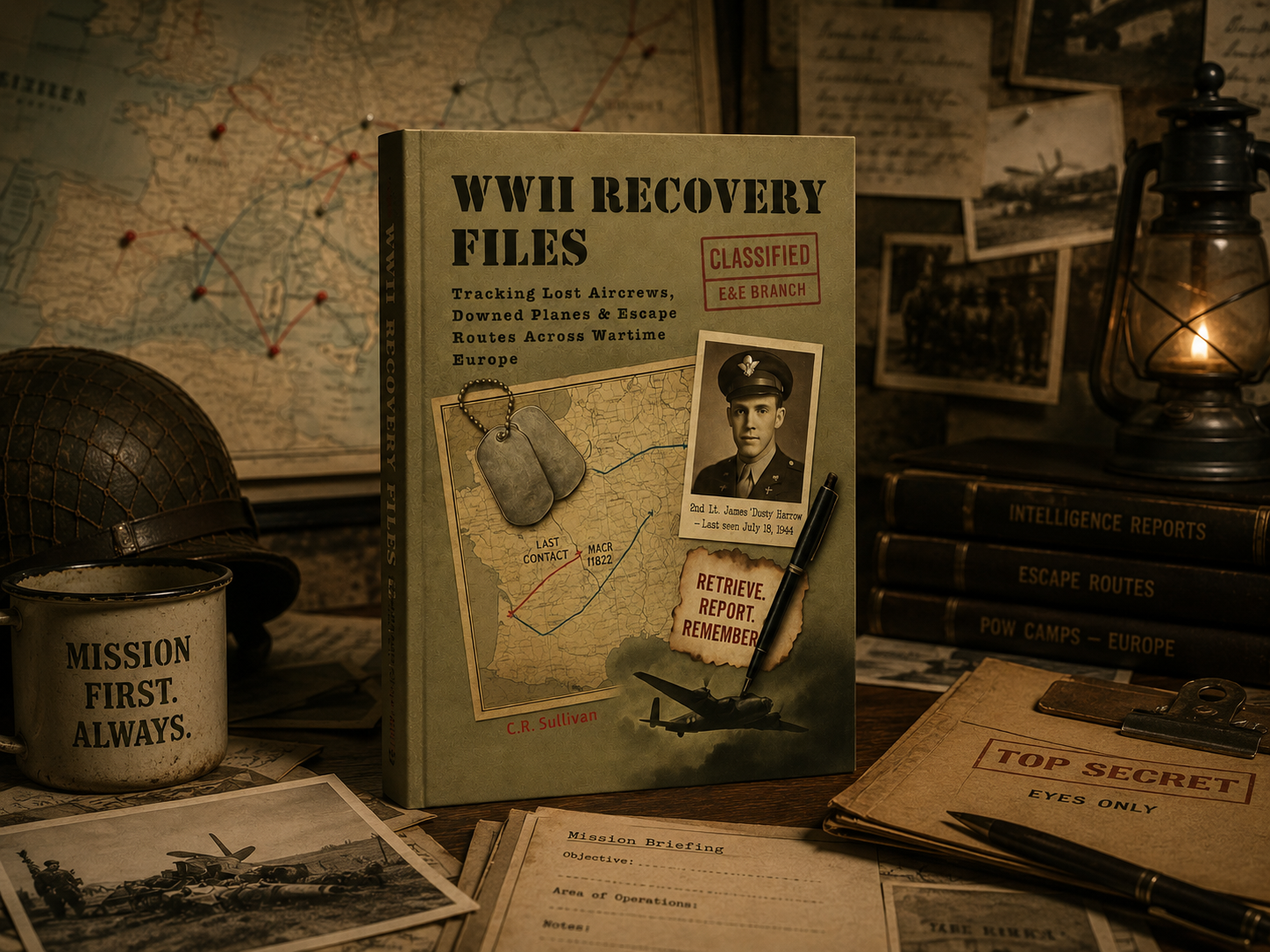
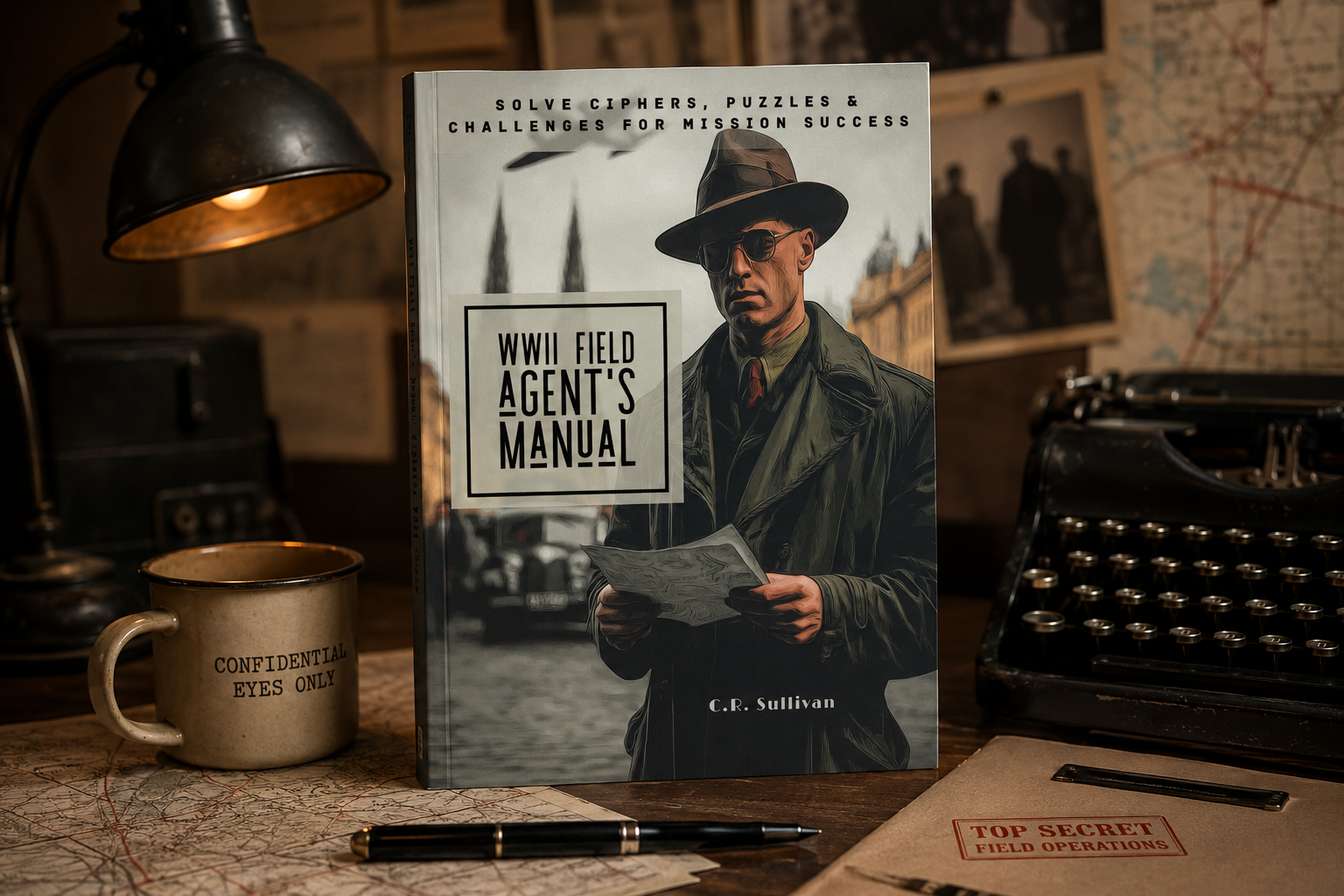
Explore related Hidden Signal Media collections for readers who enjoy history, mystery, strategy, espionage, cold cases, wartime decisions, and interactive books that turn the past into something you can hold, solve, and question.
The Training Annex
Bonus puzzles, printable mission pages, extra cipher challenges, field notes, and supplemental materials for readers who finished the manual and still want one more assignment before headquarters notices.










Latest Dispatches
The latest titles from the Hidden Signal Media Library, featuring new missions, historical activity books, puzzle files, intelligence challenges, and wartime inspired investigations ready to be opened.